Everyday Materials · Bath Textiles
What Makes a Bath Towel Feel Plush? A Guide to Weight, Texture, and Drying
A towel’s welcome is written in its fibers: in the thickness of its pile, the structure of its weave, and the way it takes up water after a bath. But the softest-feeling towel is not automatically the best choice for every home. Weight, absorbency, drying time, and care all matter—and they often pull in different directions.
Published October 25, 2026
After a shower, a towel performs a small but important transformation. It draws water from skin, holds warmth for a moment, and then begins the slower work of releasing that moisture back into the room. The experience can feel cloud-soft or crisp, substantial or barely there. Those impressions are not simply a matter of taste: they reflect how the towel’s fibers and construction interact with water, air, and use.
Plushness is often associated with thickness and a high, cushioned surface. In many towels, that surface is formed by loops of yarn that catch water and create a soft buffer against the skin. Yet more material can also mean more water retained in the cloth and more time needed for drying. A lighter towel may feel less enveloping, but it can be easier to wash, store, and air-dry between uses.
The useful question is not whether a towel is plush or practical. It is what balance fits your routine, climate, bathroom, and laundry habits. Understanding towel weight and texture makes that balance easier to find.
The anatomy of a towel’s feel
Most familiar bath towels are made from terry cloth: a woven fabric with loops that rise from one or both sides. Those loops increase the surface area available to touch water, while also giving the towel its characteristic softness and depth. When you run a hand across a terry towel, you are feeling thousands of small yarn loops flexing and brushing against the skin.
Loop height, density, yarn, and finishing all contribute to the sensation. A towel with lofty loops can feel cushioned and generous. A more compact construction may feel flatter, firmer, or more textured. A smooth, tightly woven surface can feel clean and cool rather than fluffy. No single construction defines quality for everyone: some people want a towel that wraps them in warmth, while others prefer a lighter cloth that dries quickly and takes up little shelf space.
Fiber matters, too. Cotton is widely used because it can absorb moisture and is familiar in everyday laundering. But “cotton” alone does not determine how a towel feels. Yarn quality, weave, finishing, and the way a fabric is cared for all influence its performance. A towel’s first impression may change after several washes as manufacturing residues leave and the fibers settle into regular use.
What towel weight tells you—and what it doesn’t
Towel weight is commonly described in grams per square meter, or GSM. This measurement indicates the mass of fabric over a given area. It is a helpful comparison when product details are available, but it is not a complete measure of softness, absorbency, durability, or drying speed.
In broad terms, lighter towels use less material per area, while heavier towels tend to feel more substantial. A dense towel may hold more water and provide a plush, enveloping sensation. That same water-holding capacity can leave it damp for longer, especially in a humid bathroom or a crowded drying space. A lighter towel often releases moisture sooner, though its exact performance still depends on construction, fiber, airflow, and how thoroughly it is spun and dried.
Weight should therefore be read as one clue among several, not a scorecard. Two towels with similar GSM can feel different if one has longer loops, a looser weave, or a different yarn. Likewise, a heavier towel is not necessarily more absorbent in every real-world situation. The towel must make contact with skin, pick up moisture, and then be allowed to dry between uses; each step affects the experience.
Consider your home’s conditions. A towel hanging in a well-ventilated room may dry more readily than the same towel folded over a hook in a steamy, poorly ventilated bathroom. A household with a large laundry capacity and ample drying space may find heavy towels easy to manage. For a small apartment, frequent travel, or a busy family bathroom, lighter options can be more convenient.
Texture: loops, weave, and the sensation on skin
“Soft” can mean several things. It may describe a fluffy surface, a smooth hand, a gentle drape, or the absence of a scratchy sensation. When choosing a towel, notice which quality you mean. Plush terry loops create a cushioned feel; flatter, more open constructions can feel airy and tactile. Neither sensation is inherently superior.
Texture also affects how a towel meets wet skin. A lofty pile can feel cozy and absorbent, but it may be warmer and bulkier. A flatter weave may offer a more direct, lightly textured contact and can be easier to spread out for drying. Some people appreciate a towel that gently blots; others prefer one that feels thick and soft around the shoulders. If you are sensitive to roughness, pay attention to the fabric’s surface and finishing, not just its listed weight.
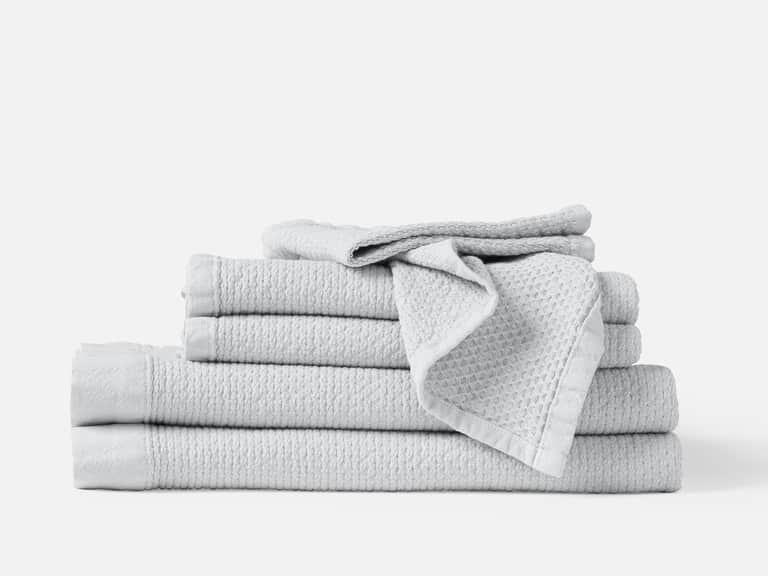
For an example of a different approach to towel texture, the Adriatic Organic Towels use a lightweight, textural weave rather than relying on a thick, lofty pile. They are made from organic cotton grown and woven in Turkey and garment-dyed, a process that gives the pieces a relaxed feel and subtle color variation. The maker describes the weave as naturally absorbent and quick-drying. This construction may appeal to someone who values an airy hand and practical drying over the enveloping feel of a heavier towel.
Those details also illustrate why a product description should be read as a whole. Fiber, construction, finishing, and care instructions help explain how a towel is meant to be used. In this case, the stated care is a cold, gentle wash with like colors, followed by low tumble drying and prompt removal. Garment dyeing can produce variations from piece to piece, so the color is not necessarily meant to look perfectly uniform.
Absorbency is more than softness
A towel can feel soft in the hand and still not behave as expected when wet. Absorbency is the ability of the fabric to take up moisture, but the sensation of absorbency is also shaped by contact and technique. Patting skin with a towel is different from dragging it across the body, and a highly textured surface may feel different from a smooth one even when both remove water effectively.
New towels sometimes have finishes or residues from manufacturing and packaging that affect how readily water moves into the fibers. Washing before first use, following the care label, is a sensible way to prepare a towel. Over time, detergent buildup, fabric softener, or insufficient rinsing may affect how a towel feels and handles moisture. If a towel seems less absorbent than it once was, review the laundry routine before assuming the fabric has reached the end of its useful life.
Fabric softener can leave a coating on fibers, which may reduce the towel’s ability to take up water. That does not mean every household must avoid it in every circumstance, but people who prioritize absorbency may prefer to use it sparingly or follow the towel maker’s instructions. Too much detergent can also leave residue, particularly when a washing machine is overloaded or the rinse is limited. Clean water, adequate space in the drum, and thorough drying help maintain performance.
Drying time: the hidden half of towel comfort
Drying is where a towel’s plushness meets the realities of a bathroom. A towel absorbs water from the body, but it must then shed that moisture to become ready for another use. The thicker and more saturated the towel, the more important it is to give it room and airflow. A towel left bunched on a hook may remain damp much longer than one opened across a bar.
Room humidity changes the equation. In a dry, ventilated space, water evaporates more readily. In a steamy bathroom with little air movement, evaporation slows. This can make a heavy towel feel persistently damp even when its fabric is well made. A fan, open door, or well-positioned towel rail can help air circulate. Spreading the towel fully after use is one of the simplest ways to improve drying conditions.
Drying speed matters for more than convenience. A towel that stays damp between uses may develop an unpleasant odor and require more frequent laundering. If that pattern is familiar, a lighter construction, improved ventilation, or a different hanging arrangement may help. In homes with limited outdoor drying space or frequent turnover, a towel that dries readily can be more comfortable in practice than one that feels especially plush straight from the linen closet.
Drying methods also influence the feel of the finished fabric. Tumble drying can restore some loft to terry loops, while line drying may leave towels feeling firmer, depending on conditions. High heat can put extra strain on textiles over time, so follow the care label and avoid assuming that hotter is better. The goal is a towel that is fully dry without unnecessary wear.
Match the towel to your routine
A useful choice begins with a practical inventory. How many people share the bathroom? How often are towels washed? Is there space to hang them fully open? Does the room stay humid, or does it have good air movement? These everyday details can matter as much as a towel’s listed specifications.
- For a plush, cozy feel: Look for a fuller towel with a cushioned surface, and make sure your bathroom and laundry routine can accommodate slower drying and more bulk.
- For quick turnaround: Consider a lighter towel or a more open, textural construction, then hang it fully spread after use.
- For limited storage: A lighter towel can be easier to fold and store, particularly in a small linen cupboard or shared household.
- For travel or frequent washing: Lower bulk may make packing and laundry easier, though care instructions and the towel’s intended use still matter.
- For sensitive preferences: Focus on the feel of the surface and the fiber information, and wash the towel before judging its long-term hand.
There is no need to make every towel in a home serve the same role. A thick bath towel may be welcome after a long shower, while lighter hand towels or guest towels may be easier to launder and replace frequently. Choosing a small range of types can make the linen cupboard more responsive to different needs rather than forcing one construction to do everything.
Care that protects softness and performance
Care begins with the label. Towels can differ in dye, weave, and finishing, so a routine that suits one may not suit another. As a general approach, avoid crowding the washing machine, use an appropriate amount of detergent, and allow the towel to dry fully. Separate colors when the care instructions recommend it, especially for new or garment-dyed textiles.
Wash towels often enough for your household’s use and conditions. A towel used daily in a humid bathroom may need washing sooner than one that dries quickly in a well-ventilated room. Between washes, hang it open rather than leaving it in a heap. This gives moisture a clearer path to escape and helps the fabric return to a dry, ready state.
Fabric care is a balance: aggressive washing and high heat can shorten the life of textiles, while inadequate drying and residue can undermine comfort. If a towel begins to feel stiff, check for detergent buildup, the machine’s load size, and the drying method. If it loses absorbency, consider whether softener or excess detergent is contributing. Small adjustments often make a noticeable difference.
For the Adriatic Organic Towels, the listed instructions specify a cold, gentle wash with like colors and low tumble drying, with prompt removal; warm ironing is optional. Following specific directions is particularly useful for garment-dyed pieces, where maintaining the character and color of the fabric is part of the care process.
A simple way to compare towels
When shopping, start by setting aside the idea that one number can describe the entire experience. Compare fabric composition and construction first, then consider weight if it is provided. Look for clear care instructions and think about whether the towel’s intended feel matches your preferences. If you can handle the fabric in person, notice how it drapes, how dense the loops feel, and whether the surface is smooth or textured.
Then imagine the towel in its real setting: hanging on your bathroom rail after a shower, waiting for the next use, and eventually going through the wash. A towel that feels wonderful in a shop but takes too long to dry in your bathroom may not remain a favorite. Conversely, a lightweight towel may seem less luxurious at first but become indispensable because it fits your routine.
Keep the comparison grounded in use. Ask whether you want warmth, a cushioned surface, compact storage, or fast drying. Consider whether you are comfortable changing your laundry habits to accommodate a heavier towel. The best choice is not an abstract ideal; it is the fabric that performs well where you live and in the rhythm of your day.
The right balance is personal
A bath towel is a modest household object, but its daily work depends on a surprisingly intricate meeting of fiber, structure, moisture, and air. Weight influences how substantial it feels. Texture shapes the touch against skin. Construction affects how water moves through the cloth. And the room itself determines how quickly that moisture can leave.
For some homes, plushness is worth the added bulk: a thick towel can make the end of a bath feel warm and sheltered. For others, a lighter weave is the more comfortable choice because it dries readily, stores neatly, and keeps pace with frequent use. Neither preference is a compromise. Each reflects a different way of living with the same practical textile.
Choose by considering the complete cycle: how the towel feels dry, how it works when wet, where it hangs afterward, and how it behaves in the laundry. When those pieces fit together, the result is more than softness. It is a towel that feels right not just once, but again and again.