Bedding materials · A field guide
Why Cotton Percale Feels Crisp: Weave, Comfort, and Care
A cool, crisp sheet is not the product of a single magic fiber or number on a label. Cotton percale gets its characteristic feel from the way its threads cross, the qualities of the cotton yarn, and the finishing choices made along the way. Learn how those elements shape comfort—and how everyday care can help percale soften without losing its airy character.
A small pattern with a distinctive feel
There is a particular sensation to climbing into a bed made with percale: the fabric feels cool at first touch, with a light resistance rather than a slippery glide. It lies neatly, rustles softly as it shifts, and seems to leave a little space between the sleeper and the sheet. That impression is often described as crisp. It is not a measure of quality by itself, but a combination of structure, fiber, finishing, and personal preference.
The essential structure is a plain weave: threads running lengthwise and crosswise pass over and under one another in a regular one-over, one-under pattern. The arrangement is simple, but its repeated intersections give the fabric a balanced, stable surface. In cotton percale, the weave usually produces a matte finish and a clean, crisp hand.
Imagine a tightly organized field of crossing paths. Each thread meets its neighbors often, and the fabric’s surface remains relatively even rather than showing the longer, floating yarns associated with some other constructions. The result is a sheet that can feel cool, breathable, and smooth without the sheen or fluid drape often linked to sateen.
That description is a useful starting point, not a guarantee that every percale sheet will feel identical. Two sheets can both be cotton percale and still differ substantially. Cotton variety, yarn preparation, thread thickness, fabric density, dyeing, and finishing all influence the final cloth. The name identifies a weave family; it does not tell the whole story.
Weave and fiber are different things
When choosing sheets, it helps to separate two ideas that are often bundled together: what a fabric is made from and how its threads are interlaced. Fiber content describes the raw material—cotton, linen, or a blend, for example. Weave describes the structure formed by the yarns. Cotton can be woven as percale or sateen; neither word, on its own, specifies the cotton’s origin, staple length, or quality.
This distinction matters because the same fiber can behave differently when it is arranged differently. Cotton percale’s balanced plain weave creates frequent intersections and a relatively matte surface. Cotton sateen commonly uses a weave with longer yarn floats on the face of the fabric. Those floats help create a smoother, more lustrous appearance and a drapier feel. The difference is structural, not a simple contest between “good cotton” and “bad cotton.”
Fiber characteristics still matter. Longer cotton fibers can be spun into smoother, more continuous yarns, while yarn quality and fabric construction affect strength, surface feel, and how the cloth changes with use. A well-made percale sheet may feel crisp and substantial; another may feel lighter or stiffer. The word percale alone cannot resolve those differences.
Finishing is another part of the equation. After weaving, fabric may be washed, softened, treated, or otherwise finished to achieve a particular hand and appearance. These processes can make a new sheet feel more relaxed from the first night, or preserve a firmer, crisper feel. A sheet’s feel out of the package is therefore not always its permanent character.
Why crispness often feels cool
“Cool” is a word people use in two related ways. It may describe the immediate sensation when a sheet touches the skin, or it may refer to how comfortable the bedding feels over the course of a night. The first impression is shaped by factors such as the fabric’s surface and how readily it draws heat away at contact. The longer experience also depends on room temperature, humidity, sleepwear, mattress materials, and the individual sleeper.
Percale’s relatively firm, matte surface can feel fresh rather than plush or slick. Its plain weave also creates a fabric with an open, breathable character, though the exact airflow depends on yarn and fabric density. Breathability should not be confused with a promise that a sheet will keep every sleeper cool in every climate. No textile can cancel out a warm room or personal differences in heat production.
For people who dislike a silky surface or tend to feel warm under heavier bedding, the crispness of percale may be appealing. Others may prefer a softer, more fluid fabric that settles closely against the body. Neither preference is more correct. Comfort is partly physical and partly sensory: the sound, weight, texture, and drape of a sheet can all influence whether it feels inviting.
One practical point is that bedding works as a system. A breathable sheet cannot compensate fully for a thick duvet in a warm room, while a lightweight cover may make a noticeable difference even when the sheets stay the same. Consider the entire sleep environment rather than expecting a weave to solve every temperature concern.
Percale and sateen: two different landscapes
Comparing percale and sateen is a little like comparing a shaded path with a smooth riverbank: both can be made from cotton, yet they meet the hand differently. Percale tends to feel crisp, dry, and matte, with a light structure that stays relatively close to the shape of the bed. Sateen tends to feel smoother and more fluid, often with a subtle sheen and a more pronounced drape.
These are tendencies, not rigid rules. Fiber, yarn, finishing, and fabric weight can blur the distinction. Some percale feels soft from the outset; some sateen is more substantial than expected. If possible, handle fabric samples or read descriptions that identify both the fiber and weave. A high thread count does not automatically make one construction better suited to your preferences.
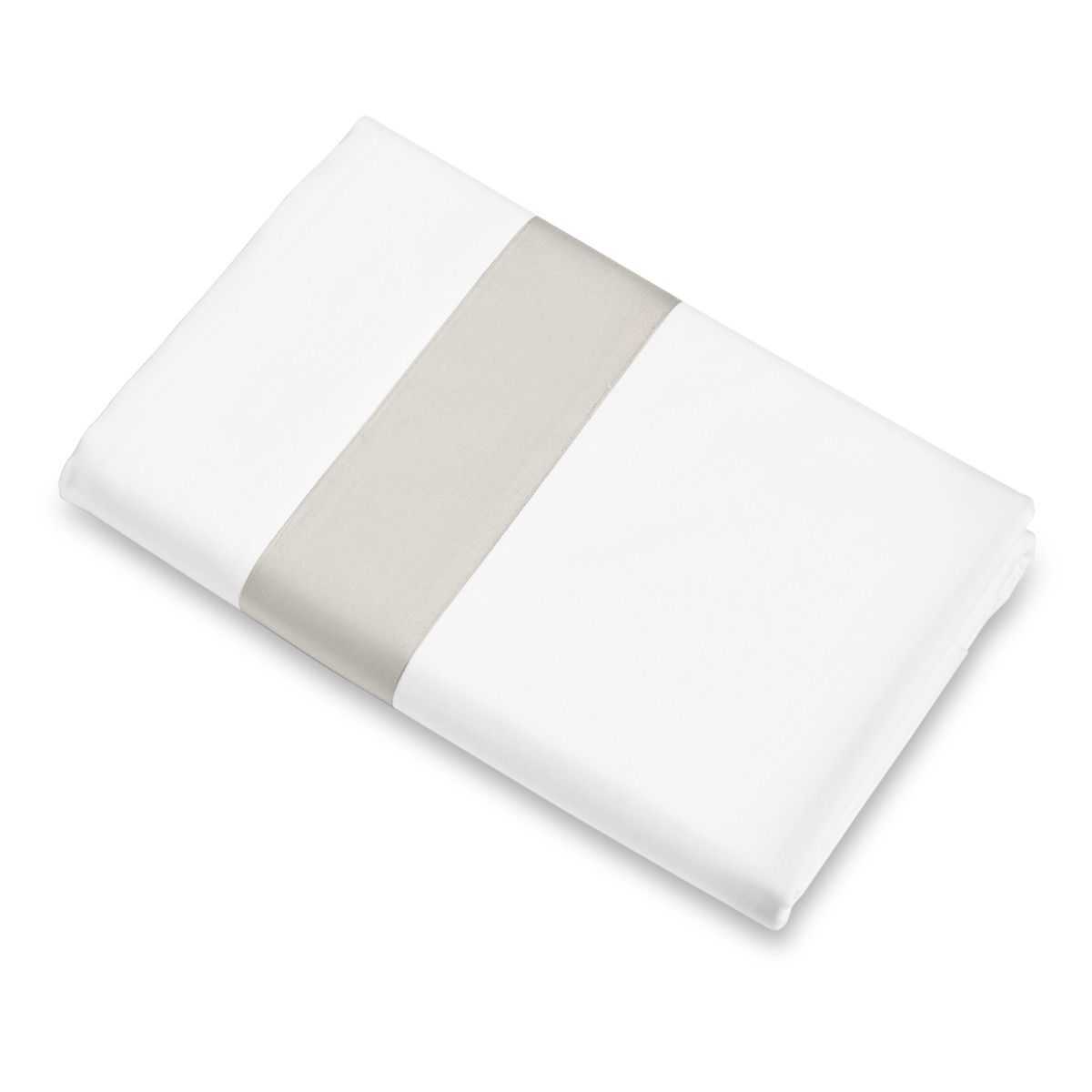
For example, the Aida Flat Sheet is made from 100% extra-long-staple cotton sateen, with a 300 thread count and a modern applied border. It offers a helpful point of comparison for someone exploring bedding materials: it is a cotton sheet, but its sateen construction is associated with a smoother hand and brighter sheen than the matte, crisp feel commonly sought in percale.
That contrast can help clarify what you like. If you want a sheet that feels light, neat, and freshly laundered, percale may be worth considering. If you enjoy a silky surface and a more flowing drape, sateen could be a better match. The best choice is the one that feels comfortable across changing seasons and repeated use—not simply the one with the most impressive-sounding specification.
How percale softens with use
New percale can feel crisp in a pleasing way, or crisp in a way that seems a little rigid. With laundering and regular use, the fabric often relaxes. Repeated washing can remove some of the stiffness associated with finishing, while the yarns gradually settle into a more familiar hand. For many owners, the result is a sheet that remains airy but feels less formal than it did on the first night.
Softening does not mean that every sheet will become dramatically plush, nor that the weave changes into something else. Percale remains percale: its construction continues to shape the matte appearance and crisp character. How quickly it relaxes depends on the fabric, finishing, laundering, and frequency of use. Some cloths soften noticeably; others retain a firmer feel for longer.
It is also possible to overdo the pursuit of softness. Strong detergents, excessive heat, or heavy use of softeners may change how a textile feels, but they can also place unnecessary stress on fibers or leave residues. The aim is not to force a sheet into a different material personality. It is to clean it gently and let normal use do its work.
If a new set feels too crisp, give it several wash-and-use cycles before deciding it is not for you. If you are sensitive to finishing residues, follow the care label and wash the sheets before first use. Do not assume that harsh treatment will speed up softening safely; a little patience is usually kinder to cotton.
A care routine that protects the fabric
Good sheet care is less about complicated rituals than about avoiding unnecessary strain. Always begin with the manufacturer’s care label, because finishes, colors, and construction can vary. Where the label permits, a gentle wash with a mild detergent is a dependable starting point. Use an amount appropriate to the load: excess detergent can be difficult to rinse away and may leave fabric feeling coated.
Wash sheets with similar colors and, when practical, avoid crowding the machine. A packed drum leaves less room for fabric to move and rinse freely. Separating bedding from items with zippers, hooks, or rough surfaces can also reduce snagging and abrasion. These small choices help protect the even surface that gives percale its clean, smooth appearance.
Choose a water temperature and cycle that align with the care label and the level of cleaning needed. Hotter is not automatically better. Heat can contribute to shrinkage or wear in some fabrics, while a suitable warm or cool wash may clean routine soil effectively. If hygiene needs or care instructions call for a particular temperature, follow those directions rather than a universal rule.
Drying deserves equal attention. Overly high heat and extended tumbling can stress cotton fibers, encourage shrinkage, and leave sheets more wrinkled. Use a lower heat setting when allowed, and remove the bedding promptly once it is dry. Air-drying is another option if the space and conditions allow. Percale’s crisp, uncomplicated look can include a few natural wrinkles; ironing is a personal choice, not a requirement for comfort.
Fabric softener is optional, and it is not always the best route to a soft hand. Some softeners can leave a surface coating that changes absorbency or texture. If you use one, follow its instructions and consider whether you like the result. Avoid combining multiple products in an effort to make the sheets softer quickly. Care labels are the most reliable guide for a particular set.
Thread count is only one clue
Thread count—the number of threads counted within a defined area of fabric—is often presented as a shorthand for softness or luxury. It can provide some information about construction, but it does not describe everything that determines how a sheet feels. Fiber quality, yarn size, weave, finishing, and honest measurement all matter. A larger number is not automatically a better sheet, and comparisons can be misleading when methods differ.
Percale is sometimes associated with a particular range of thread counts, but no single number guarantees the signature crisp feel. A lower-count fabric made with suitable yarns may feel airy and comfortable; a denser one may feel more substantial. The right balance depends on the maker’s construction and the sleeper’s preference.
When evaluating bedding, look for clear information about fiber content and weave, and treat performance language as a starting point for questions rather than proof. Is the sheet cotton percale or cotton sateen? Is the fabric described as lightweight or substantial? Are care instructions available? These details make a more useful picture than thread count alone.
Choosing percale for your own bed
Think first about the sensation you want. Do you prefer a sheet that feels cool and crisp as you settle in, or one that feels smooth and drapes closely? Do you like a freshly pressed appearance, or would you rather have a softer, less structured surface? Your answers can narrow the field more effectively than a long list of technical claims.
Then consider practical fit and care. Check the dimensions and pocket depth needed for your mattress, especially if it has a topper or a thicker profile. Confirm laundering instructions and whether your preferred drying method is suitable. If you rotate between seasonal bedding, consider whether a lighter percale will work comfortably with the covers you already own.
Finally, allow for adaptation. A sheet can feel different after its first wash, after a month of use, and in a different season. Notice whether the fabric remains comfortable through the night, whether it is easy to care for, and whether its texture suits your habits. These everyday observations are more meaningful than chasing an abstract idea of the perfect sheet.
The lasting appeal of a plain weave
Percale’s appeal lies partly in its restraint. Its one-over, one-under structure is neither ornate nor complicated, yet it produces a recognizable combination of crispness, breathability, and a matte finish. Cotton fibers contribute their own qualities, while yarn, finishing, and care shape how those qualities appear in a particular sheet.
With regular, considerate laundering, percale often softens into a relaxed version of its original self. It may lose some of the new-sheet stiffness while keeping the cool, clean hand that drew its admirers in the first place. That evolution is part of the material’s character: the weave remains steady as the fabric becomes more familiar.
When a sheet is described as crisp, ask what is behind the word. Look beyond the label to the weave, fiber, finishing, and care instructions. Percale is not simply “cool cotton,” just as sateen is not merely “soft cotton.” Each construction creates a different experience, and the most useful choice is the one that fits the way you sleep.
At a glance
- Weave: Cotton percale uses a balanced one-over, one-under plain weave, commonly associated with a matte, crisp surface.
- Fiber: Cotton describes the material; percale describes the weave. Fiber and construction affect feel in different ways.
- Comparison: Percale often feels crisp and airy, while sateen often feels smoother and more drapey. Actual results vary by fabric and finish.
- Use: Percale may relax and soften over repeated wash-and-use cycles without losing its basic woven structure.
- Care: Follow the label, use an appropriate amount of mild detergent, avoid unnecessary heat, and remove sheets promptly when dry.